The Forgotten Power of the In-Person Audiobook:
Read Alouds Brought to Life by the Enthusiastic Teacher in You
Top 5 Read Aloud Books for 5th Grade from a 5th Grade Teacher
By: Craig Dutra
-
Imagine the first time you met Percy or Harry. The first time you opened the cover to The Sorcerer’s Stone or The Lightning Thief. The magical world you were transported into. The relationship you formed with main characters, their best friends, their families (I’m thinking of Sally Jackson here, not the Dursleys). If you’re anything like me, I know Grover and Ron felt like your besties, too. Nothing beats getting lost in a book.

But some kids never get to experience that mind-blowing feeling of disappearing into a story. The marvelous moment when your mind produces a motion picture in your head from the words you just read. It’s not because the kids don’t want to, but because reading still feels like work. They’re not comfortable enough yet to get swept away, and they haven’t been exposed to enough quality literature to even want to try.
That’s where read-alouds come in.
That’s where you come in.
I’m the only teacher on my fifth-grade team who keeps a dedicated time for read-alouds every single day. Technically, we all have it penciled into our schedules as “Interactive Read Aloud Time”, but I’m the only one who actually uses it to consistently read novels aloud to my students. The others fill that time with occasional short picture books when they can but mostly with whatever they feel their classes need most at the time and I get it. Time is precious. But for me, reading aloud isn’t an extra. It isn’t just something that’s nice to do. It’s a necessity. It’s the heart of our day. It’s part of our routine.
But there’s just something about reading aloud that makes it the centerpiece of my classroom.
The two parts of the day I look forward to most as a teacher? Morning Meeting and Read-Aloud Time.
That’s where relationships are formed.
That’s where classroom culture is built.
That’s where the magic happens.
The Dutra Magic, to be exact.
Why Should Every Teacher Make Time to Read Aloud Everyday
I love reading and I want my students to love reading, too. That’s what all teachers want, isn’t it?
Not only do I love reading, I love being read to. That’s why I have an Audible subscription and always have at least one audiobook in my rotation. And any audiobook aficionado knows how much of a game-changer a good narrator can be. I’ve had “good” books I couldn’t make it past the first few chapters of because the narrator’s voice just wasn’t for me. Too dull. Too monotone. Too much of a weird sounding voice. (Sorry that was a little judgey but I mean come on)
Teachers have the ability to be the in-person audiobook narrator for their students. We can elevate the story with expression, unique voices for each character, and genuine investment in the story we want them to love as much as we do. This will not only help them to love the stories as much as we do but also model what good reading looks like.
Reading aloud isn’t just about literacy — it’s about connection. It’s a time to bond, to talk, to share predictions and reactions, to draw favorite scenes from the book. That’s why I always end every chapter with a “Any thoughts? Reactions? Questions? Comments? Predictions?” It’s one of the few moments in my day when all of my students are in the same room together. (Two of my students with significant needs on their IEPs get pulled out for over 120 minutes a day.)
It’s a shared story.
A shared moment.
A memory we all carry.
Years later, I’ve had students tell me exactly where they sat when I read Because of Mr. Terupt during that first month of the school year. The stories we read become part of our story as a classroom.
Every year I try to switch it up and add a new book or two, but there are a few staples I keep coming back to again and again and for good reason. They’re crowd-pleasers. I love to read them, and my students love to listen to them, year after year. Here’s my list of my top five books to read aloud to the fifth grade students in your classroom.
Top 5 Read Aloud Books for 5th Grade:
#5 “Percy Jackson & the Olympians: The Lightning Thief” by Rick Riordan
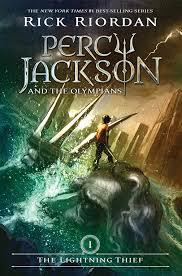
My first time reading this book was during my second year teaching fifth grade, and I’ll admit, I was skeptical. I mean, come on, I grew up on Harry Potter. I figured this would be a knockoff version of that classic series from my childhood.
Boy, was I wrong.
Percy Jackson shares a few similarities with Harry Potter, but it absolutely holds its own lane.
My favorite characters to narrate during my in-person audiobook readings are Ares, rough and gruff, the kind of voice that leaves my throat scratchy for the rest of the day, Kronos, with a deep Batman growl, and Medusa, where I really emphasize those “s” sounds to give her that super serpentiney vibe. It’s really a fun book to read aloud, full of humor, vivid imagery, and figurative language that sparks classroom discussions on similes, metaphors, and personification.
This book has been a staple in my classroom for four years. This year will be my first without it, not because I don’t love it, but because so many of my students have already read it. I want to broaden their horizons and introduce something new. Still, I recommend Percy Jackson to any fifth-grade classroom, 100%. It’s a modern classic, and it doesn’t hurt that the Disney+ series stays relatively true to the story (better than the dreadful movie at least). And really, what kid, or teacher, doesn’t love watching the big screen adaptation after finishing the book?
#4 “A Christmas Carol” (Great Illustrated Classics Edition) by Charles Dickens

This book was handed down to me as a school tradition: “We’ve always read this every year.” Being someone who never likes to break a good tradition, I went with it. I was familiar with Scrooge and his classic “bah humbug,” probably from Scrooge McDuck or The Muppet Christmas Carol, but I’d never actually read A Christmas Carol myself until coming to my school.
The way they lay out the Great Illustrated Classics version, you can easily fly through it in the two or three weeks in December leading up to winter break, that’s how I usually pace it every year.
My Scrooge voice is unmatched. I add a little Jim Carrey-as-the-Grinch spice, probably because Jim Carrey also voices Scrooge in the animated 2009 Disney version of the movie. I put on my best performance for that one every year, and the kids always seem to appreciate it.
There’s a reason this story has lasted nearly two hundred years: it hits. The backstory of the mean old man pulls at your heartstrings. Everyone ends up cheering for Scrooge by the end, and when he sees his own name on the gravestone with the Ghost of Christmas Yet to Come, you can’t help but feel inspired to spread a little Christmas spirit yourself when he wakes up and realizes it’s still Christmas Day.
It’s such a great way to end December and head off into winter break, and a new calendar year. It doesn’t hurt that there are plenty of movie adaptations to choose from; I always go with the 2009 version, for obvious reasons.
#3 “Home of the Brave” by Katherine Applegate
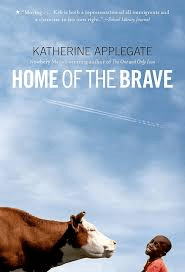
One of the few things that came from Lucy Calkins’ program that I actually found useful was the suggestion to read this book. Home of the Brave is amazing. Anything by Katherine Applegate is amazing, but I truly love this one. It feels underappreciated compared to some of her other books like The One and Only Ivan or Wishtree, but this book is fire.
Kids take a little time to warm up to it, to be honest. But once they adjust to its free-verse poem style and Kek’s way of describing his world, they’re hooked like fish on the end of the line. This book is another gem for integrating figurative language into your lessons, and the way Kek sees the world is ripe for imagery, similes, metaphors, and personification.
Speaking of the way Kek describes the world, I’ve had students make “Kektionaries” with all of his unique “Kekisms” such as “flying boat” (airplanes) and “brown sticks” (French fries). The best language-barrier moment has to be when Kek destroys his aunt’s dishes by putting them in the “machine for washing.” My students always struggle to hold back their laughter and stifle their reactions as he describes the clanging and crashing of the plates inside the washing machine.
The juxtaposition of Kek’s optimism and Ganwar’s realism also opens up great classroom discussions.
What I love most about this book, though, is Kek himself and the exposure Katherine Applegate gives fifth graders to the story of the Lost Boys who found new lives in the United States. The racial tension is subtle but real throughout the story, from neighborhood boys teasing Kek when he’s with Hannah to a classmate’s cruel “Hungry, Kenya?” remark in homeroom. It’s a quick read but a powerful one, a book I’ll have a hard time replacing in my classroom anytime soon.
#2 “The Watsons Go to Birmingham – 1963” by Christopher Paul Curtis

Okay, this book has a little bit of everything. And even though it occupies the number two spot on my list, it arguably could be my absolute favorite, and possibly holds the number one space in my heart.
It’s got comedy, absurdity, and heart, all intertwined with the historical elements of the Civil Rights Movement and the 16th Street Baptist Church bombing. Every student ends up falling in love with Kenny and the rest of the “Weird Watsons” long before the moment Kenny finally makes his way out from the “world-famous Watson Pet Hospital.”
From the instant Byron gets his lips stuck to the frozen side mirror of the car, my students are locked into this book for the long haul. The way Christopher Paul Curtis brings this world to life is like no other. There are so many memorable moments tucked between the pages, Rufus and Cody, the dinosaur wars with LJ, Byron’s match-lighting incident in the bathroom, the stolen glove, the conk, the “Wool Pooh”, there are just too many to name. This book is chock-full of them.
The only “complaint” I have about this book is that the word “ass” pops up (twice, I think). I usually mouth it for my students, but I’ve also said it out loud for extra effect especially in that scene when the boys on the bus are bullying Rufus and Cody: “Sit your ass down!” It always gets a reaction and usually a few requests for me to say it again, which I never oblige. Once is more than enough.
This book fits perfectly in a fifth-grade classroom, especially if you teach the Civil Rights Movement, because it’s set right in the peak of that time period. The contrast between the Watsons’ experiences in Flint and in Birmingham gives readers a glimpse into what life was like in the South as Jim Crow laws were beginning to be challenged.
The historical aspects are present but never overpowering. They’re noticeable enough for a historically conscious teacher to appreciate, but not so heavy-handed that they take away from the story itself. I haven’t had a student complain about this book yet and I can’t imagine I ever will.
#1 “Because of Mr. Terupt” by Rob Buyea
Now, the moment you’ve all been waiting for, my number one spot on the Top 5 Read-Aloud Books for a Fifth-Grade Classroom.
Drum roll, please…
Because of Mr. Terupt.
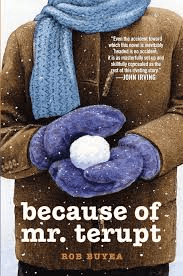
I have to preface this nomination with the fact that I am extremely biased. Mr. Terupt’s a fifth-grade teacher and so am I. He’s an elementary school teacher who also happens to be a man and, well, so am I.
Let’s face it: there aren’t many books that capture what it feels like to be a male teacher in the upper elementary grades quite like this one.
I’ve read this book every single year of my teaching career, all eight of them. Six years in fifth grade, and even the two years I taught fourth. This book is always a banger. It’s one my students remember, every character and every moment, right up through the last day of school and beyond.
I’ve adopted so many elements from this book into my own classroom, but my favorite is the link chain that hangs from our ceiling. In Because of Mr. Terupt, the class adds a link for every good day, and when the chain touches the floor, they earn a free day.
In my class, we earn “link moments.” Every time we hit five link moments, we add a new link to the chain. And, like in the book, once our chain hits the floor, we celebrate with a free day, lovingly renamed “Link Day.”
Beyond the tie-ins to my own classroom, this book has layers. Like any great story written for fifth graders, it’s funny but it’s also deeply human. The humor hooks them right away. Peter’s bathroom antics in the first section always get laughs, and Mr. Terupt’s response (“tie a knot in it”) reels the students in from the jump.
It’s got “tushie” talk and giggles, sure, but it’s also got depth. Not the heavy racial or historical depth like some of my other favorites on this list, but an emotional depth that’s just as important. This book tackles bullying, divorce, absent parents, judgmental peers, students with special needs, comas, and even death, all in ways kids can actually feel and talk about.
You can’t help but get attached to these characters. You feel bad for Peter. You hurt for Jeffrey. You root for Mr. Terupt’s recovery. You start to understand why Lexie is the way she is. And you breathe a sigh of relief when she becomes friends with the rest of the girls again.
Speaking of Lexie, by far my favorite voice to perform in any read-aloud is hers. I’ve perfected the valley-girl voice, like, you wouldn’t believe, like, seriously. The first time I whip it out when she’s introduced, the kids lose it. They can’t believe their “manly” teacher (and I use that word very loosely) can do such an accurate girl voice. It’s fun for everyone.
One note of caution: the “r-word” comes up multiple times in this book. I choose to say it for a more accurate portrayal, and to spark authentic discussion, but I completely understand why some teachers, including one of my fifth-grade teammates, choose to skip it altogether.
Also, this book has a couple of sequels, which I always recommend my students read on their own. The key phrase there is on their own. Don’t read the sequel aloud unless you’re ready for some lively conversations about periods and puberty.
Because of Mr. Terupt sets the tone for the year. A fifth-grade teacher, a fifth-grade classroom, desks in groups, real life mirrors the story. And every year, when we get to the looping part, I always have kids who hope they can loop with me too, just like the students in Room 202.
Last Words
Before you abandon reading aloud to your class in favor of something more “productive,” remember everything you’re giving up.
You’re giving up bonding.
You’re giving up an opportunity to build classroom culture and real relationships with your students.
You’re giving up the chance to share your love of literature, live and in person, with the kids sitting right in front of you.
You’re taking away discussions and memories.
And most of all, you’re taking away their chance to fall in love with books they might never have picked up on their own.
-
Imagine the first time you met Percy or Harry. The first time you opened the cover to The Sorcerer’s Stone or The Lightning Thief. The magical world you were transported into. The relationship you formed with main characters, their best friends, their families (I’m thinking of Sally Jackson here, not the Dursleys). If you’re anything like me, I know Grover and Ron felt like your besties, too. Nothing beats getting lost in a book.
But some kids never get to experience that mind-blowing feeling of disappearing into a story. The marvelous moment when your mind produces a motion picture in your head from the words you just read. It’s not because the kids don’t want to, but because reading still feels like work. They’re not comfortable enough yet to get swept away, and they haven’t been exposed to enough quality literature to even want to try.
That’s where read-alouds come in.
That’s where you come in.
I’m the only teacher on my fifth-grade team who keeps a dedicated time for read-alouds every single day. Technically, we all have it penciled into our schedules as “Interactive Read Aloud Time”, but I’m the only one who actually uses it to consistently read novels aloud to my students. The others fill that time with occasional short picture books when they can but mostly with whatever they feel their classes need most at the time and I get it. Time is precious. But for me, reading aloud isn’t an extra. It isn’t just something that’s nice to do. It’s a necessity. It’s the heart of our day. It’s part of our routine.
But there’s just something about reading aloud that makes it the centerpiece of my classroom.
The two parts of the day I look forward to most as a teacher? Morning Meeting and Read-Aloud Time.
That’s where relationships are formed.
That’s where classroom culture is built.
That’s where the magic happens.
The Dutra Magic, to be exact.
Why Should Every Teacher Make Time to Read Aloud Everyday
I love reading and I want my students to love reading, too. That’s what all teachers want, isn’t it?
Not only do I love reading, I love being read to. That’s why I have an Audible subscription and always have at least one audiobook in my rotation. And any audiobook aficionado knows how much of a game-changer a good narrator can be. I’ve had “good” books I couldn’t make it past the first few chapters of because the narrator’s voice just wasn’t for me. Too dull. Too monotone. Too much of a weird sounding voice. (Sorry that was a little judgey but I mean come on)
Teachers have the ability to be the in-person audiobook narrator for their students. We can elevate the story with expression, unique voices for each character, and genuine investment in the story we want them to love as much as we do. This will not only help them to love the stories as much as we do but also model what good reading looks like.
Reading aloud isn’t just about literacy — it’s about connection. It’s a time to bond, to talk, to share predictions and reactions, to draw favorite scenes from the book. That’s why I always end every chapter with a “Any thoughts? Reactions? Questions? Comments? Predictions?” It’s one of the few moments in my day when all of my students are in the same room together. (Two of my students with significant needs on their IEPs get pulled out for over 120 minutes a day.)
It’s a shared story.
A shared moment.
A memory we all carry.
Years later, I’ve had students tell me exactly where they sat when I read Because of Mr. Terupt during that first month of the school year. The stories we read become part of our story as a classroom.
Every year I try to switch it up and add a new book or two, but there are a few staples I keep coming back to again and again and for good reason. They’re crowd-pleasers. I love to read them, and my students love to listen to them, year after year. Here’s my list of my top five books to read aloud to the fifth grade students in your classroom.
Top 5 Read Aloud Books for 5th Grade:
#5 “Percy Jackson & the Olympians: The Lightning Thief” by Rick Riordan
My first time reading this book was during my second year teaching fifth grade, and I’ll admit, I was skeptical. I mean, come on, I grew up on Harry Potter. I figured this would be a knockoff version of that classic series from my childhood.
Boy, was I wrong.
Percy Jackson shares a few similarities with Harry Potter, but it absolutely holds its own lane.
My favorite characters to narrate during my in-person audiobook readings are Ares, rough and gruff, the kind of voice that leaves my throat scratchy for the rest of the day, Kronos, with a deep Batman growl, and Medusa, where I really emphasize those “s” sounds to give her that super serpentiney vibe. It’s really a fun book to read aloud, full of humor, vivid imagery, and figurative language that sparks classroom discussions on similes, metaphors, and personification.
This book has been a staple in my classroom for four years. This year will be my first without it, not because I don’t love it, but because so many of my students have already read it. I want to broaden their horizons and introduce something new. Still, I recommend Percy Jackson to any fifth-grade classroom, 100%. It’s a modern classic, and it doesn’t hurt that the Disney+ series stays relatively true to the story (better than the dreadful movie at least). And really, what kid, or teacher, doesn’t love watching the big screen adaptation after finishing the book?
#4 “A Christmas Carol” (Great Illustrated Classics Edition) by Charles Dickens
This book was handed down to me as a school tradition: “We’ve always read this every year.” Being someone who never likes to break a good tradition, I went with it. I was familiar with Scrooge and his classic “bah humbug,” probably from Scrooge McDuck or The Muppet Christmas Carol, but I’d never actually read A Christmas Carol myself until coming to my school.
The way they lay out the Great Illustrated Classics version, you can easily fly through it in the two or three weeks in December leading up to winter break, that’s how I usually pace it every year.
My Scrooge voice is unmatched. I add a little Jim Carrey-as-the-Grinch spice, probably because Jim Carrey also voices Scrooge in the animated 2009 Disney version of the movie. I put on my best performance for that one every year, and the kids always seem to appreciate it.
There’s a reason this story has lasted nearly two hundred years: it hits. The backstory of the mean old man pulls at your heartstrings. Everyone ends up cheering for Scrooge by the end, and when he sees his own name on the gravestone with the Ghost of Christmas Yet to Come, you can’t help but feel inspired to spread a little Christmas spirit yourself when he wakes up and realizes it’s still Christmas Day.
It’s such a great way to end December and head off into winter break, and a new calendar year. It doesn’t hurt that there are plenty of movie adaptations to choose from; I always go with the 2009 version, for obvious reasons.
#3 “Home of the Brave” by Katherine Applegate
One of the few things that came from Lucy Calkins’ program that I actually found useful was the suggestion to read this book. Home of the Brave is amazing. Anything by Katherine Applegate is amazing, but I truly love this one. It feels underappreciated compared to some of her other books like The One and Only Ivan or Wishtree, but this book is fire.
Kids take a little time to warm up to it, to be honest. But once they adjust to its free-verse poem style and Kek’s way of describing his world, they’re hooked like fish on the end of the line. This book is another gem for integrating figurative language into your lessons, and the way Kek sees the world is ripe for imagery, similes, metaphors, and personification.
Speaking of the way Kek describes the world, I’ve had students make “Kektionaries” with all of his unique “Kekisms” such as “flying boat” (airplanes) and “brown sticks” (French fries). The best language-barrier moment has to be when Kek destroys his aunt’s dishes by putting them in the “machine for washing.” My students always struggle to hold back their laughter and stifle their reactions as he describes the clanging and crashing of the plates inside the washing machine.
The juxtaposition of Kek’s optimism and Ganwar’s realism also opens up great classroom discussions.
What I love most about this book, though, is Kek himself and the exposure Katherine Applegate gives fifth graders to the story of the Lost Boys who found new lives in the United States. The racial tension is subtle but real throughout the story, from neighborhood boys teasing Kek when he’s with Hannah to a classmate’s cruel “Hungry, Kenya?” remark in homeroom. It’s a quick read but a powerful one, a book I’ll have a hard time replacing in my classroom anytime soon.
#2 “The Watsons Go to Birmingham – 1963” by Christopher Paul Curtis
Okay, this book has a little bit of everything. And even though it occupies the number two spot on my list, it arguably could be my absolute favorite, and possibly holds the number one space in my heart.
It’s got comedy, absurdity, and heart, all intertwined with the historical elements of the Civil Rights Movement and the 16th Street Baptist Church bombing. Every student ends up falling in love with Kenny and the rest of the “Weird Watsons” long before the moment Kenny finally makes his way out from the “world-famous Watson Pet Hospital.”
From the instant Byron gets his lips stuck to the frozen side mirror of the car, my students are locked into this book for the long haul. The way Christopher Paul Curtis brings this world to life is like no other. There are so many memorable moments tucked between the pages, Rufus and Cody, the dinosaur wars with LJ, Byron’s match-lighting incident in the bathroom, the stolen glove, the conk, the “Wool Pooh”, there are just too many to name. This book is chock-full of them.
The only “complaint” I have about this book is that the word “ass” pops up (twice, I think). I usually mouth it for my students, but I’ve also said it out loud for extra effect especially in that scene when the boys on the bus are bullying Rufus and Cody: “Sit your ass down!” It always gets a reaction and usually a few requests for me to say it again, which I never oblige. Once is more than enough.
This book fits perfectly in a fifth-grade classroom, especially if you teach the Civil Rights Movement, because it’s set right in the peak of that time period. The contrast between the Watsons’ experiences in Flint and in Birmingham gives readers a glimpse into what life was like in the South as Jim Crow laws were beginning to be challenged.
The historical aspects are present but never overpowering. They’re noticeable enough for a historically conscious teacher to appreciate, but not so heavy-handed that they take away from the story itself. I haven’t had a student complain about this book yet and I can’t imagine I ever will.
#1 “Because of Mr. Terupt” by Rob Buyea
Now, the moment you’ve all been waiting for, my number one spot on the Top 5 Read-Aloud Books for a Fifth-Grade Classroom.
Drum roll, please…
Because of Mr. Terupt.
I have to preface this nomination with the fact that I am extremely biased. Mr. Terupt’s a fifth-grade teacher and so am I. He’s an elementary school teacher who also happens to be a man and, well, so am I.
Let’s face it: there aren’t many books that capture what it feels like to be a male teacher in the upper elementary grades quite like this one.
I’ve read this book every single year of my teaching career, all eight of them. Six years in fifth grade, and even the two years I taught fourth. This book is always a banger. It’s one my students remember, every character and every moment, right up through the last day of school and beyond.
I’ve adopted so many elements from this book into my own classroom, but my favorite is the link chain that hangs from our ceiling. In Because of Mr. Terupt, the class adds a link for every good day, and when the chain touches the floor, they earn a free day.
In my class, we earn “link moments.” Every time we hit five link moments, we add a new link to the chain. And, like in the book, once our chain hits the floor, we celebrate with a free day, lovingly renamed “Link Day.”
Beyond the tie-ins to my own classroom, this book has layers. Like any great story written for fifth graders, it’s funny but it’s also deeply human. The humor hooks them right away. Peter’s bathroom antics in the first section always get laughs, and Mr. Terupt’s response (“tie a knot in it”) reels the students in from the jump.
It’s got “tushie” talk and giggles, sure, but it’s also got depth. Not the heavy racial or historical depth like some of my other favorites on this list, but an emotional depth that’s just as important. This book tackles bullying, divorce, absent parents, judgmental peers, students with special needs, comas, and even death, all in ways kids can actually feel and talk about.
You can’t help but get attached to these characters. You feel bad for Peter. You hurt for Jeffrey. You root for Mr. Terupt’s recovery. You start to understand why Lexie is the way she is. And you breathe a sigh of relief when she becomes friends with the rest of the girls again.
Speaking of Lexie, by far my favorite voice to perform in any read-aloud is hers. I’ve perfected the valley-girl voice, like, you wouldn’t believe, like, seriously. The first time I whip it out when she’s introduced, the kids lose it. They can’t believe their “manly” teacher (and I use that word very loosely) can do such an accurate girl voice. It’s fun for everyone.
One note of caution: the “r-word” comes up multiple times in this book. I choose to say it for a more accurate portrayal, and to spark authentic discussion, but I completely understand why some teachers, including one of my fifth-grade teammates, choose to skip it altogether.
Also, this book has a couple of sequels, which I always recommend my students read on their own. The key phrase there is on their own. Don’t read the sequel aloud unless you’re ready for some lively conversations about periods and puberty.
Because of Mr. Terupt sets the tone for the year. A fifth-grade teacher, a fifth-grade classroom, desks in groups, real life mirrors the story. And every year, when we get to the looping part, I always have kids who hope they can loop with me too, just like the students in Room 202.
Last Words
Before you abandon reading aloud to your class in favor of something more “productive,” remember everything you’re giving up.
You’re giving up bonding.
You’re giving up an opportunity to build classroom culture and real relationships with your students.
You’re giving up the chance to share your love of literature, live and in person, with the kids sitting right in front of you.
You’re taking away discussions and memories.
And most of all, you’re taking away their chance to fall in love with books they might never have picked up on their own.
-
Imagine the first time you met Percy or Harry. The first time you opened the cover to The Sorcerer’s Stone or The Lightning Thief. The magical world you were transported into. The relationship you formed with main characters, their best friends, their families (I’m thinking of Sally Jackson here, not the Dursleys). If you’re anything like me, I know Grover and Ron felt like your besties, too. Nothing beats getting lost in a book.
But some kids never get to experience that mind-blowing feeling of disappearing into a story. The marvelous moment when your mind produces a motion picture in your head from the words you just read. It’s not because the kids don’t want to, but because reading still feels like work. They’re not comfortable enough yet to get swept away, and they haven’t been exposed to enough quality literature to even want to try.
That’s where read-alouds come in.
That’s where you come in.
I’m the only teacher on my fifth-grade team who keeps a dedicated time for read-alouds every single day. Technically, we all have it penciled into our schedules as “Interactive Read Aloud Time”, but I’m the only one who actually uses it to consistently read novels aloud to my students. The others fill that time with occasional short picture books when they can but mostly with whatever they feel their classes need most at the time and I get it. Time is precious. But for me, reading aloud isn’t an extra. It isn’t just something that’s nice to do. It’s a necessity. It’s the heart of our day. It’s part of our routine.
But there’s just something about reading aloud that makes it the centerpiece of my classroom.
The two parts of the day I look forward to most as a teacher? Morning Meeting and Read-Aloud Time.
That’s where relationships are formed.
That’s where classroom culture is built.
That’s where the magic happens.
The Dutra Magic, to be exact.
Why Should Every Teacher Make Time to Read Aloud Everyday
I love reading and I want my students to love reading, too. That’s what all teachers want, isn’t it?
Not only do I love reading, I love being read to. That’s why I have an Audible subscription and always have at least one audiobook in my rotation. And any audiobook aficionado knows how much of a game-changer a good narrator can be. I’ve had “good” books I couldn’t make it past the first few chapters of because the narrator’s voice just wasn’t for me. Too dull. Too monotone. Too much of a weird sounding voice. (Sorry that was a little judgey but I mean come on)
Teachers have the ability to be the in-person audiobook narrator for their students. We can elevate the story with expression, unique voices for each character, and genuine investment in the story we want them to love as much as we do. This will not only help them to love the stories as much as we do but also model what good reading looks like.
Reading aloud isn’t just about literacy — it’s about connection. It’s a time to bond, to talk, to share predictions and reactions, to draw favorite scenes from the book. That’s why I always end every chapter with a “Any thoughts? Reactions? Questions? Comments? Predictions?” It’s one of the few moments in my day when all of my students are in the same room together. (Two of my students with significant needs on their IEPs get pulled out for over 120 minutes a day.)
It’s a shared story.
A shared moment.
A memory we all carry.
Years later, I’ve had students tell me exactly where they sat when I read Because of Mr. Terupt during that first month of the school year. The stories we read become part of our story as a classroom.
Every year I try to switch it up and add a new book or two, but there are a few staples I keep coming back to again and again and for good reason. They’re crowd-pleasers. I love to read them, and my students love to listen to them, year after year. Here’s my list of my top five books to read aloud to the fifth grade students in your classroom.
Top 5 Read Aloud Books for 5th Grade:
#5 “Percy Jackson & the Olympians: The Lightning Thief” by Rick Riordan
My first time reading this book was during my second year teaching fifth grade, and I’ll admit, I was skeptical. I mean, come on, I grew up on Harry Potter. I figured this would be a knockoff version of that classic series from my childhood.
Boy, was I wrong.
Percy Jackson shares a few similarities with Harry Potter, but it absolutely holds its own lane.
My favorite characters to narrate during my in-person audiobook readings are Ares, rough and gruff, the kind of voice that leaves my throat scratchy for the rest of the day, Kronos, with a deep Batman growl, and Medusa, where I really emphasize those “s” sounds to give her that super serpentiney vibe. It’s really a fun book to read aloud, full of humor, vivid imagery, and figurative language that sparks classroom discussions on similes, metaphors, and personification.
This book has been a staple in my classroom for four years. This year will be my first without it, not because I don’t love it, but because so many of my students have already read it. I want to broaden their horizons and introduce something new. Still, I recommend Percy Jackson to any fifth-grade classroom, 100%. It’s a modern classic, and it doesn’t hurt that the Disney+ series stays relatively true to the story (better than the dreadful movie at least). And really, what kid, or teacher, doesn’t love watching the big screen adaptation after finishing the book?
#4 “A Christmas Carol” (Great Illustrated Classics Edition) by Charles Dickens
This book was handed down to me as a school tradition: “We’ve always read this every year.” Being someone who never likes to break a good tradition, I went with it. I was familiar with Scrooge and his classic “bah humbug,” probably from Scrooge McDuck or The Muppet Christmas Carol, but I’d never actually read A Christmas Carol myself until coming to my school.
The way they lay out the Great Illustrated Classics version, you can easily fly through it in the two or three weeks in December leading up to winter break, that’s how I usually pace it every year.
My Scrooge voice is unmatched. I add a little Jim Carrey-as-the-Grinch spice, probably because Jim Carrey also voices Scrooge in the animated 2009 Disney version of the movie. I put on my best performance for that one every year, and the kids always seem to appreciate it.
There’s a reason this story has lasted nearly two hundred years: it hits. The backstory of the mean old man pulls at your heartstrings. Everyone ends up cheering for Scrooge by the end, and when he sees his own name on the gravestone with the Ghost of Christmas Yet to Come, you can’t help but feel inspired to spread a little Christmas spirit yourself when he wakes up and realizes it’s still Christmas Day.
It’s such a great way to end December and head off into winter break, and a new calendar year. It doesn’t hurt that there are plenty of movie adaptations to choose from; I always go with the 2009 version, for obvious reasons.
#3 “Home of the Brave” by Katherine Applegate
One of the few things that came from Lucy Calkins’ program that I actually found useful was the suggestion to read this book. Home of the Brave is amazing. Anything by Katherine Applegate is amazing, but I truly love this one. It feels underappreciated compared to some of her other books like The One and Only Ivan or Wishtree, but this book is fire.
Kids take a little time to warm up to it, to be honest. But once they adjust to its free-verse poem style and Kek’s way of describing his world, they’re hooked like fish on the end of the line. This book is another gem for integrating figurative language into your lessons, and the way Kek sees the world is ripe for imagery, similes, metaphors, and personification.
Speaking of the way Kek describes the world, I’ve had students make “Kektionaries” with all of his unique “Kekisms” such as “flying boat” (airplanes) and “brown sticks” (French fries). The best language-barrier moment has to be when Kek destroys his aunt’s dishes by putting them in the “machine for washing.” My students always struggle to hold back their laughter and stifle their reactions as he describes the clanging and crashing of the plates inside the washing machine.
The juxtaposition of Kek’s optimism and Ganwar’s realism also opens up great classroom discussions.
What I love most about this book, though, is Kek himself and the exposure Katherine Applegate gives fifth graders to the story of the Lost Boys who found new lives in the United States. The racial tension is subtle but real throughout the story, from neighborhood boys teasing Kek when he’s with Hannah to a classmate’s cruel “Hungry, Kenya?” remark in homeroom. It’s a quick read but a powerful one, a book I’ll have a hard time replacing in my classroom anytime soon.
#2 “The Watsons Go to Birmingham – 1963” by Christopher Paul Curtis
Okay, this book has a little bit of everything. And even though it occupies the number two spot on my list, it arguably could be my absolute favorite, and possibly holds the number one space in my heart.
It’s got comedy, absurdity, and heart, all intertwined with the historical elements of the Civil Rights Movement and the 16th Street Baptist Church bombing. Every student ends up falling in love with Kenny and the rest of the “Weird Watsons” long before the moment Kenny finally makes his way out from the “world-famous Watson Pet Hospital.”
From the instant Byron gets his lips stuck to the frozen side mirror of the car, my students are locked into this book for the long haul. The way Christopher Paul Curtis brings this world to life is like no other. There are so many memorable moments tucked between the pages, Rufus and Cody, the dinosaur wars with LJ, Byron’s match-lighting incident in the bathroom, the stolen glove, the conk, the “Wool Pooh”, there are just too many to name. This book is chock-full of them.
The only “complaint” I have about this book is that the word “ass” pops up (twice, I think). I usually mouth it for my students, but I’ve also said it out loud for extra effect especially in that scene when the boys on the bus are bullying Rufus and Cody: “Sit your ass down!” It always gets a reaction and usually a few requests for me to say it again, which I never oblige. Once is more than enough.
This book fits perfectly in a fifth-grade classroom, especially if you teach the Civil Rights Movement, because it’s set right in the peak of that time period. The contrast between the Watsons’ experiences in Flint and in Birmingham gives readers a glimpse into what life was like in the South as Jim Crow laws were beginning to be challenged.
The historical aspects are present but never overpowering. They’re noticeable enough for a historically conscious teacher to appreciate, but not so heavy-handed that they take away from the story itself. I haven’t had a student complain about this book yet and I can’t imagine I ever will.
#1 “Because of Mr. Terupt” by Rob Buyea
Now, the moment you’ve all been waiting for, my number one spot on the Top 5 Read-Aloud Books for a Fifth-Grade Classroom.
Drum roll, please…
Because of Mr. Terupt.
I have to preface this nomination with the fact that I am extremely biased. Mr. Terupt’s a fifth-grade teacher and so am I. He’s an elementary school teacher who also happens to be a man and, well, so am I.
Let’s face it: there aren’t many books that capture what it feels like to be a male teacher in the upper elementary grades quite like this one.
I’ve read this book every single year of my teaching career, all eight of them. Six years in fifth grade, and even the two years I taught fourth. This book is always a banger. It’s one my students remember, every character and every moment, right up through the last day of school and beyond.
I’ve adopted so many elements from this book into my own classroom, but my favorite is the link chain that hangs from our ceiling. In Because of Mr. Terupt, the class adds a link for every good day, and when the chain touches the floor, they earn a free day.
In my class, we earn “link moments.” Every time we hit five link moments, we add a new link to the chain. And, like in the book, once our chain hits the floor, we celebrate with a free day, lovingly renamed “Link Day.”
Beyond the tie-ins to my own classroom, this book has layers. Like any great story written for fifth graders, it’s funny but it’s also deeply human. The humor hooks them right away. Peter’s bathroom antics in the first section always get laughs, and Mr. Terupt’s response (“tie a knot in it”) reels the students in from the jump.
It’s got “tushie” talk and giggles, sure, but it’s also got depth. Not the heavy racial or historical depth like some of my other favorites on this list, but an emotional depth that’s just as important. This book tackles bullying, divorce, absent parents, judgmental peers, students with special needs, comas, and even death, all in ways kids can actually feel and talk about.
You can’t help but get attached to these characters. You feel bad for Peter. You hurt for Jeffrey. You root for Mr. Terupt’s recovery. You start to understand why Lexie is the way she is. And you breathe a sigh of relief when she becomes friends with the rest of the girls again.
Speaking of Lexie, by far my favorite voice to perform in any read-aloud is hers. I’ve perfected the valley-girl voice, like, you wouldn’t believe, like, seriously. The first time I whip it out when she’s introduced, the kids lose it. They can’t believe their “manly” teacher (and I use that word very loosely) can do such an accurate girl voice. It’s fun for everyone.
One note of caution: the “r-word” comes up multiple times in this book. I choose to say it for a more accurate portrayal, and to spark authentic discussion, but I completely understand why some teachers, including one of my fifth-grade teammates, choose to skip it altogether.
Also, this book has a couple of sequels, which I always recommend my students read on their own. The key phrase there is on their own. Don’t read the sequel aloud unless you’re ready for some lively conversations about periods and puberty.
Because of Mr. Terupt sets the tone for the year. A fifth-grade teacher, a fifth-grade classroom, desks in groups, real life mirrors the story. And every year, when we get to the looping part, I always have kids who hope they can loop with me too, just like the students in Room 202.
Last Words
Before you abandon reading aloud to your class in favor of something more “productive,” remember everything you’re giving up.
You’re giving up bonding.
You’re giving up an opportunity to build classroom culture and real relationships with your students.
You’re giving up the chance to share your love of literature, live and in person, with the kids sitting right in front of you.
You’re taking away discussions and memories.
And most of all, you’re taking away their chance to fall in love with books they might never have picked up on their own.
-
Imagine the first time you met Percy or Harry. The first time you opened the cover to The Sorcerer’s Stone or The Lightning Thief. The magical world you were transported into. The relationship you formed with main characters, their best friends, their families (I’m thinking of Sally Jackson here, not the Dursleys). If you’re anything like me, I know Grover and Ron felt like your besties, too. Nothing beats getting lost in a book.
But some kids never get to experience that mind-blowing feeling of disappearing into a story. The marvelous moment when your mind produces a motion picture in your head from the words you just read. It’s not because the kids don’t want to, but because reading still feels like work. They’re not comfortable enough yet to get swept away, and they haven’t been exposed to enough quality literature to even want to try.
That’s where read-alouds come in.
That’s where you come in.
I’m the only teacher on my fifth-grade team who keeps a dedicated time for read-alouds every single day. Technically, we all have it penciled into our schedules as “Interactive Read Aloud Time”, but I’m the only one who actually uses it to consistently read novels aloud to my students. The others fill that time with occasional short picture books when they can but mostly with whatever they feel their classes need most at the time and I get it. Time is precious. But for me, reading aloud isn’t an extra. It isn’t just something that’s nice to do. It’s a necessity. It’s the heart of our day. It’s part of our routine.
But there’s just something about reading aloud that makes it the centerpiece of my classroom.
The two parts of the day I look forward to most as a teacher? Morning Meeting and Read-Aloud Time.
That’s where relationships are formed.
That’s where classroom culture is built.
That’s where the magic happens.
The Dutra Magic, to be exact.
Why Should Every Teacher Make Time to Read Aloud Everyday
I love reading and I want my students to love reading, too. That’s what all teachers want, isn’t it?
Not only do I love reading, I love being read to. That’s why I have an Audible subscription and always have at least one audiobook in my rotation. And any audiobook aficionado knows how much of a game-changer a good narrator can be. I’ve had “good” books I couldn’t make it past the first few chapters of because the narrator’s voice just wasn’t for me. Too dull. Too monotone. Too much of a weird sounding voice. (Sorry that was a little judgey but I mean come on)
Teachers have the ability to be the in-person audiobook narrator for their students. We can elevate the story with expression, unique voices for each character, and genuine investment in the story we want them to love as much as we do. This will not only help them to love the stories as much as we do but also model what good reading looks like.
Reading aloud isn’t just about literacy — it’s about connection. It’s a time to bond, to talk, to share predictions and reactions, to draw favorite scenes from the book. That’s why I always end every chapter with a “Any thoughts? Reactions? Questions? Comments? Predictions?” It’s one of the few moments in my day when all of my students are in the same room together. (Two of my students with significant needs on their IEPs get pulled out for over 120 minutes a day.)
It’s a shared story.
A shared moment.
A memory we all carry.
Years later, I’ve had students tell me exactly where they sat when I read Because of Mr. Terupt during that first month of the school year. The stories we read become part of our story as a classroom.
Every year I try to switch it up and add a new book or two, but there are a few staples I keep coming back to again and again and for good reason. They’re crowd-pleasers. I love to read them, and my students love to listen to them, year after year. Here’s my list of my top five books to read aloud to the fifth grade students in your classroom.
Top 5 Read Aloud Books for 5th Grade:
#5 “Percy Jackson & the Olympians: The Lightning Thief” by Rick Riordan
My first time reading this book was during my second year teaching fifth grade, and I’ll admit, I was skeptical. I mean, come on, I grew up on Harry Potter. I figured this would be a knockoff version of that classic series from my childhood.
Boy, was I wrong.
Percy Jackson shares a few similarities with Harry Potter, but it absolutely holds its own lane.
My favorite characters to narrate during my in-person audiobook readings are Ares, rough and gruff, the kind of voice that leaves my throat scratchy for the rest of the day, Kronos, with a deep Batman growl, and Medusa, where I really emphasize those “s” sounds to give her that super serpentiney vibe. It’s really a fun book to read aloud, full of humor, vivid imagery, and figurative language that sparks classroom discussions on similes, metaphors, and personification.
This book has been a staple in my classroom for four years. This year will be my first without it, not because I don’t love it, but because so many of my students have already read it. I want to broaden their horizons and introduce something new. Still, I recommend Percy Jackson to any fifth-grade classroom, 100%. It’s a modern classic, and it doesn’t hurt that the Disney+ series stays relatively true to the story (better than the dreadful movie at least). And really, what kid, or teacher, doesn’t love watching the big screen adaptation after finishing the book?
#4 “A Christmas Carol” (Great Illustrated Classics Edition) by Charles Dickens
This book was handed down to me as a school tradition: “We’ve always read this every year.” Being someone who never likes to break a good tradition, I went with it. I was familiar with Scrooge and his classic “bah humbug,” probably from Scrooge McDuck or The Muppet Christmas Carol, but I’d never actually read A Christmas Carol myself until coming to my school.
The way they lay out the Great Illustrated Classics version, you can easily fly through it in the two or three weeks in December leading up to winter break, that’s how I usually pace it every year.
My Scrooge voice is unmatched. I add a little Jim Carrey-as-the-Grinch spice, probably because Jim Carrey also voices Scrooge in the animated 2009 Disney version of the movie. I put on my best performance for that one every year, and the kids always seem to appreciate it.
There’s a reason this story has lasted nearly two hundred years: it hits. The backstory of the mean old man pulls at your heartstrings. Everyone ends up cheering for Scrooge by the end, and when he sees his own name on the gravestone with the Ghost of Christmas Yet to Come, you can’t help but feel inspired to spread a little Christmas spirit yourself when he wakes up and realizes it’s still Christmas Day.
It’s such a great way to end December and head off into winter break, and a new calendar year. It doesn’t hurt that there are plenty of movie adaptations to choose from; I always go with the 2009 version, for obvious reasons.
#3 “Home of the Brave” by Katherine Applegate
One of the few things that came from Lucy Calkins’ program that I actually found useful was the suggestion to read this book. Home of the Brave is amazing. Anything by Katherine Applegate is amazing, but I truly love this one. It feels underappreciated compared to some of her other books like The One and Only Ivan or Wishtree, but this book is fire.
Kids take a little time to warm up to it, to be honest. But once they adjust to its free-verse poem style and Kek’s way of describing his world, they’re hooked like fish on the end of the line. This book is another gem for integrating figurative language into your lessons, and the way Kek sees the world is ripe for imagery, similes, metaphors, and personification.
Speaking of the way Kek describes the world, I’ve had students make “Kektionaries” with all of his unique “Kekisms” such as “flying boat” (airplanes) and “brown sticks” (French fries). The best language-barrier moment has to be when Kek destroys his aunt’s dishes by putting them in the “machine for washing.” My students always struggle to hold back their laughter and stifle their reactions as he describes the clanging and crashing of the plates inside the washing machine.
The juxtaposition of Kek’s optimism and Ganwar’s realism also opens up great classroom discussions.
What I love most about this book, though, is Kek himself and the exposure Katherine Applegate gives fifth graders to the story of the Lost Boys who found new lives in the United States. The racial tension is subtle but real throughout the story, from neighborhood boys teasing Kek when he’s with Hannah to a classmate’s cruel “Hungry, Kenya?” remark in homeroom. It’s a quick read but a powerful one, a book I’ll have a hard time replacing in my classroom anytime soon.
#2 “The Watsons Go to Birmingham – 1963” by Christopher Paul Curtis
Okay, this book has a little bit of everything. And even though it occupies the number two spot on my list, it arguably could be my absolute favorite, and possibly holds the number one space in my heart.
It’s got comedy, absurdity, and heart, all intertwined with the historical elements of the Civil Rights Movement and the 16th Street Baptist Church bombing. Every student ends up falling in love with Kenny and the rest of the “Weird Watsons” long before the moment Kenny finally makes his way out from the “world-famous Watson Pet Hospital.”
From the instant Byron gets his lips stuck to the frozen side mirror of the car, my students are locked into this book for the long haul. The way Christopher Paul Curtis brings this world to life is like no other. There are so many memorable moments tucked between the pages, Rufus and Cody, the dinosaur wars with LJ, Byron’s match-lighting incident in the bathroom, the stolen glove, the conk, the “Wool Pooh”, there are just too many to name. This book is chock-full of them.
The only “complaint” I have about this book is that the word “ass” pops up (twice, I think). I usually mouth it for my students, but I’ve also said it out loud for extra effect especially in that scene when the boys on the bus are bullying Rufus and Cody: “Sit your ass down!” It always gets a reaction and usually a few requests for me to say it again, which I never oblige. Once is more than enough.
This book fits perfectly in a fifth-grade classroom, especially if you teach the Civil Rights Movement, because it’s set right in the peak of that time period. The contrast between the Watsons’ experiences in Flint and in Birmingham gives readers a glimpse into what life was like in the South as Jim Crow laws were beginning to be challenged.
The historical aspects are present but never overpowering. They’re noticeable enough for a historically conscious teacher to appreciate, but not so heavy-handed that they take away from the story itself. I haven’t had a student complain about this book yet and I can’t imagine I ever will.
#1 “Because of Mr. Terupt” by Rob Buyea
Now, the moment you’ve all been waiting for, my number one spot on the Top 5 Read-Aloud Books for a Fifth-Grade Classroom.
Drum roll, please…
Because of Mr. Terupt.
I have to preface this nomination with the fact that I am extremely biased. Mr. Terupt’s a fifth-grade teacher and so am I. He’s an elementary school teacher who also happens to be a man and, well, so am I.
Let’s face it: there aren’t many books that capture what it feels like to be a male teacher in the upper elementary grades quite like this one.
I’ve read this book every single year of my teaching career, all eight of them. Six years in fifth grade, and even the two years I taught fourth. This book is always a banger. It’s one my students remember, every character and every moment, right up through the last day of school and beyond.
I’ve adopted so many elements from this book into my own classroom, but my favorite is the link chain that hangs from our ceiling. In Because of Mr. Terupt, the class adds a link for every good day, and when the chain touches the floor, they earn a free day.
In my class, we earn “link moments.” Every time we hit five link moments, we add a new link to the chain. And, like in the book, once our chain hits the floor, we celebrate with a free day, lovingly renamed “Link Day.”
Beyond the tie-ins to my own classroom, this book has layers. Like any great story written for fifth graders, it’s funny but it’s also deeply human. The humor hooks them right away. Peter’s bathroom antics in the first section always get laughs, and Mr. Terupt’s response (“tie a knot in it”) reels the students in from the jump.
It’s got “tushie” talk and giggles, sure, but it’s also got depth. Not the heavy racial or historical depth like some of my other favorites on this list, but an emotional depth that’s just as important. This book tackles bullying, divorce, absent parents, judgmental peers, students with special needs, comas, and even death, all in ways kids can actually feel and talk about.
You can’t help but get attached to these characters. You feel bad for Peter. You hurt for Jeffrey. You root for Mr. Terupt’s recovery. You start to understand why Lexie is the way she is. And you breathe a sigh of relief when she becomes friends with the rest of the girls again.
Speaking of Lexie, by far my favorite voice to perform in any read-aloud is hers. I’ve perfected the valley-girl voice, like, you wouldn’t believe, like, seriously. The first time I whip it out when she’s introduced, the kids lose it. They can’t believe their “manly” teacher (and I use that word very loosely) can do such an accurate girl voice. It’s fun for everyone.
One note of caution: the “r-word” comes up multiple times in this book. I choose to say it for a more accurate portrayal, and to spark authentic discussion, but I completely understand why some teachers, including one of my fifth-grade teammates, choose to skip it altogether.
Also, this book has a couple of sequels, which I always recommend my students read on their own. The key phrase there is on their own. Don’t read the sequel aloud unless you’re ready for some lively conversations about periods and puberty.
Because of Mr. Terupt sets the tone for the year. A fifth-grade teacher, a fifth-grade classroom, desks in groups, real life mirrors the story. And every year, when we get to the looping part, I always have kids who hope they can loop with me too, just like the students in Room 202.
Last Words
Before you abandon reading aloud to your class in favor of something more “productive,” remember everything you’re giving up.
You’re giving up bonding.
You’re giving up an opportunity to build classroom culture and real relationships with your students.
You’re giving up the chance to share your love of literature, live and in person, with the kids sitting right in front of you.
You’re taking away discussions and memories.
And most of all, you’re taking away their chance to fall in love with books they might never have picked up on their own.
-
Imagine the first time you met Percy or Harry. The first time you opened the cover to The Sorcerer’s Stone or The Lightning Thief. The magical world you were transported into. The relationship you formed with main characters, their best friends, their families (I’m thinking of Sally Jackson here, not the Dursleys). If you’re anything like me, I know Grover and Ron felt like your besties, too. Nothing beats getting lost in a book.
But some kids never get to experience that mind-blowing feeling of disappearing into a story. The marvelous moment when your mind produces a motion picture in your head from the words you just read. It’s not because the kids don’t want to, but because reading still feels like work. They’re not comfortable enough yet to get swept away, and they haven’t been exposed to enough quality literature to even want to try.
That’s where read-alouds come in.
That’s where you come in.
I’m the only teacher on my fifth-grade team who keeps a dedicated time for read-alouds every single day. Technically, we all have it penciled into our schedules as “Interactive Read Aloud Time”, but I’m the only one who actually uses it to consistently read novels aloud to my students. The others fill that time with occasional short picture books when they can but mostly with whatever they feel their classes need most at the time and I get it. Time is precious. But for me, reading aloud isn’t an extra. It isn’t just something that’s nice to do. It’s a necessity. It’s the heart of our day. It’s part of our routine.
But there’s just something about reading aloud that makes it the centerpiece of my classroom.
The two parts of the day I look forward to most as a teacher? Morning Meeting and Read-Aloud Time.
That’s where relationships are formed.
That’s where classroom culture is built.
That’s where the magic happens.
The Dutra Magic, to be exact.
Why Should Every Teacher Make Time to Read Aloud Everyday
I love reading and I want my students to love reading, too. That’s what all teachers want, isn’t it?
Not only do I love reading, I love being read to. That’s why I have an Audible subscription and always have at least one audiobook in my rotation. And any audiobook aficionado knows how much of a game-changer a good narrator can be. I’ve had “good” books I couldn’t make it past the first few chapters of because the narrator’s voice just wasn’t for me. Too dull. Too monotone. Too much of a weird sounding voice. (Sorry that was a little judgey but I mean come on)
Teachers have the ability to be the in-person audiobook narrator for their students. We can elevate the story with expression, unique voices for each character, and genuine investment in the story we want them to love as much as we do. This will not only help them to love the stories as much as we do but also model what good reading looks like.
Reading aloud isn’t just about literacy — it’s about connection. It’s a time to bond, to talk, to share predictions and reactions, to draw favorite scenes from the book. That’s why I always end every chapter with a “Any thoughts? Reactions? Questions? Comments? Predictions?” It’s one of the few moments in my day when all of my students are in the same room together. (Two of my students with significant needs on their IEPs get pulled out for over 120 minutes a day.)
It’s a shared story.
A shared moment.
A memory we all carry.
Years later, I’ve had students tell me exactly where they sat when I read Because of Mr. Terupt during that first month of the school year. The stories we read become part of our story as a classroom.
Every year I try to switch it up and add a new book or two, but there are a few staples I keep coming back to again and again and for good reason. They’re crowd-pleasers. I love to read them, and my students love to listen to them, year after year. Here’s my list of my top five books to read aloud to the fifth grade students in your classroom.
Top 5 Read Aloud Books for 5th Grade:
#5 “Percy Jackson & the Olympians: The Lightning Thief” by Rick Riordan
My first time reading this book was during my second year teaching fifth grade, and I’ll admit, I was skeptical. I mean, come on, I grew up on Harry Potter. I figured this would be a knockoff version of that classic series from my childhood.
Boy, was I wrong.
Percy Jackson shares a few similarities with Harry Potter, but it absolutely holds its own lane.
My favorite characters to narrate during my in-person audiobook readings are Ares, rough and gruff, the kind of voice that leaves my throat scratchy for the rest of the day, Kronos, with a deep Batman growl, and Medusa, where I really emphasize those “s” sounds to give her that super serpentiney vibe. It’s really a fun book to read aloud, full of humor, vivid imagery, and figurative language that sparks classroom discussions on similes, metaphors, and personification.
This book has been a staple in my classroom for four years. This year will be my first without it, not because I don’t love it, but because so many of my students have already read it. I want to broaden their horizons and introduce something new. Still, I recommend Percy Jackson to any fifth-grade classroom, 100%. It’s a modern classic, and it doesn’t hurt that the Disney+ series stays relatively true to the story (better than the dreadful movie at least). And really, what kid, or teacher, doesn’t love watching the big screen adaptation after finishing the book?
#4 “A Christmas Carol” (Great Illustrated Classics Edition) by Charles Dickens
This book was handed down to me as a school tradition: “We’ve always read this every year.” Being someone who never likes to break a good tradition, I went with it. I was familiar with Scrooge and his classic “bah humbug,” probably from Scrooge McDuck or The Muppet Christmas Carol, but I’d never actually read A Christmas Carol myself until coming to my school.
The way they lay out the Great Illustrated Classics version, you can easily fly through it in the two or three weeks in December leading up to winter break, that’s how I usually pace it every year.
My Scrooge voice is unmatched. I add a little Jim Carrey-as-the-Grinch spice, probably because Jim Carrey also voices Scrooge in the animated 2009 Disney version of the movie. I put on my best performance for that one every year, and the kids always seem to appreciate it.
There’s a reason this story has lasted nearly two hundred years: it hits. The backstory of the mean old man pulls at your heartstrings. Everyone ends up cheering for Scrooge by the end, and when he sees his own name on the gravestone with the Ghost of Christmas Yet to Come, you can’t help but feel inspired to spread a little Christmas spirit yourself when he wakes up and realizes it’s still Christmas Day.
It’s such a great way to end December and head off into winter break, and a new calendar year. It doesn’t hurt that there are plenty of movie adaptations to choose from; I always go with the 2009 version, for obvious reasons.
#3 “Home of the Brave” by Katherine Applegate
One of the few things that came from Lucy Calkins’ program that I actually found useful was the suggestion to read this book. Home of the Brave is amazing. Anything by Katherine Applegate is amazing, but I truly love this one. It feels underappreciated compared to some of her other books like The One and Only Ivan or Wishtree, but this book is fire.
Kids take a little time to warm up to it, to be honest. But once they adjust to its free-verse poem style and Kek’s way of describing his world, they’re hooked like fish on the end of the line. This book is another gem for integrating figurative language into your lessons, and the way Kek sees the world is ripe for imagery, similes, metaphors, and personification.
Speaking of the way Kek describes the world, I’ve had students make “Kektionaries” with all of his unique “Kekisms” such as “flying boat” (airplanes) and “brown sticks” (French fries). The best language-barrier moment has to be when Kek destroys his aunt’s dishes by putting them in the “machine for washing.” My students always struggle to hold back their laughter and stifle their reactions as he describes the clanging and crashing of the plates inside the washing machine.
The juxtaposition of Kek’s optimism and Ganwar’s realism also opens up great classroom discussions.
What I love most about this book, though, is Kek himself and the exposure Katherine Applegate gives fifth graders to the story of the Lost Boys who found new lives in the United States. The racial tension is subtle but real throughout the story, from neighborhood boys teasing Kek when he’s with Hannah to a classmate’s cruel “Hungry, Kenya?” remark in homeroom. It’s a quick read but a powerful one, a book I’ll have a hard time replacing in my classroom anytime soon.
#2 “The Watsons Go to Birmingham – 1963” by Christopher Paul Curtis
Okay, this book has a little bit of everything. And even though it occupies the number two spot on my list, it arguably could be my absolute favorite, and possibly holds the number one space in my heart.
It’s got comedy, absurdity, and heart, all intertwined with the historical elements of the Civil Rights Movement and the 16th Street Baptist Church bombing. Every student ends up falling in love with Kenny and the rest of the “Weird Watsons” long before the moment Kenny finally makes his way out from the “world-famous Watson Pet Hospital.”
From the instant Byron gets his lips stuck to the frozen side mirror of the car, my students are locked into this book for the long haul. The way Christopher Paul Curtis brings this world to life is like no other. There are so many memorable moments tucked between the pages, Rufus and Cody, the dinosaur wars with LJ, Byron’s match-lighting incident in the bathroom, the stolen glove, the conk, the “Wool Pooh”, there are just too many to name. This book is chock-full of them.
The only “complaint” I have about this book is that the word “ass” pops up (twice, I think). I usually mouth it for my students, but I’ve also said it out loud for extra effect especially in that scene when the boys on the bus are bullying Rufus and Cody: “Sit your ass down!” It always gets a reaction and usually a few requests for me to say it again, which I never oblige. Once is more than enough.
This book fits perfectly in a fifth-grade classroom, especially if you teach the Civil Rights Movement, because it’s set right in the peak of that time period. The contrast between the Watsons’ experiences in Flint and in Birmingham gives readers a glimpse into what life was like in the South as Jim Crow laws were beginning to be challenged.
The historical aspects are present but never overpowering. They’re noticeable enough for a historically conscious teacher to appreciate, but not so heavy-handed that they take away from the story itself. I haven’t had a student complain about this book yet and I can’t imagine I ever will.
#1 “Because of Mr. Terupt” by Rob Buyea
Now, the moment you’ve all been waiting for, my number one spot on the Top 5 Read-Aloud Books for a Fifth-Grade Classroom.
Drum roll, please…
Because of Mr. Terupt.
I have to preface this nomination with the fact that I am extremely biased. Mr. Terupt’s a fifth-grade teacher and so am I. He’s an elementary school teacher who also happens to be a man and, well, so am I.
Let’s face it: there aren’t many books that capture what it feels like to be a male teacher in the upper elementary grades quite like this one.
I’ve read this book every single year of my teaching career, all eight of them. Six years in fifth grade, and even the two years I taught fourth. This book is always a banger. It’s one my students remember, every character and every moment, right up through the last day of school and beyond.
I’ve adopted so many elements from this book into my own classroom, but my favorite is the link chain that hangs from our ceiling. In Because of Mr. Terupt, the class adds a link for every good day, and when the chain touches the floor, they earn a free day.
In my class, we earn “link moments.” Every time we hit five link moments, we add a new link to the chain. And, like in the book, once our chain hits the floor, we celebrate with a free day, lovingly renamed “Link Day.”
Beyond the tie-ins to my own classroom, this book has layers. Like any great story written for fifth graders, it’s funny but it’s also deeply human. The humor hooks them right away. Peter’s bathroom antics in the first section always get laughs, and Mr. Terupt’s response (“tie a knot in it”) reels the students in from the jump.
It’s got “tushie” talk and giggles, sure, but it’s also got depth. Not the heavy racial or historical depth like some of my other favorites on this list, but an emotional depth that’s just as important. This book tackles bullying, divorce, absent parents, judgmental peers, students with special needs, comas, and even death, all in ways kids can actually feel and talk about.
You can’t help but get attached to these characters. You feel bad for Peter. You hurt for Jeffrey. You root for Mr. Terupt’s recovery. You start to understand why Lexie is the way she is. And you breathe a sigh of relief when she becomes friends with the rest of the girls again.
Speaking of Lexie, by far my favorite voice to perform in any read-aloud is hers. I’ve perfected the valley-girl voice, like, you wouldn’t believe, like, seriously. The first time I whip it out when she’s introduced, the kids lose it. They can’t believe their “manly” teacher (and I use that word very loosely) can do such an accurate girl voice. It’s fun for everyone.
One note of caution: the “r-word” comes up multiple times in this book. I choose to say it for a more accurate portrayal, and to spark authentic discussion, but I completely understand why some teachers, including one of my fifth-grade teammates, choose to skip it altogether.
Also, this book has a couple of sequels, which I always recommend my students read on their own. The key phrase there is on their own. Don’t read the sequel aloud unless you’re ready for some lively conversations about periods and puberty.
Because of Mr. Terupt sets the tone for the year. A fifth-grade teacher, a fifth-grade classroom, desks in groups, real life mirrors the story. And every year, when we get to the looping part, I always have kids who hope they can loop with me too, just like the students in Room 202.
Last Words
Before you abandon reading aloud to your class in favor of something more “productive,” remember everything you’re giving up.
You’re giving up bonding.
You’re giving up an opportunity to build classroom culture and real relationships with your students.
You’re giving up the chance to share your love of literature, live and in person, with the kids sitting right in front of you.
You’re taking away discussions and memories.
And most of all, you’re taking away their chance to fall in love with books they might never have picked up on their own.
-
Imagine the first time you met Percy or Harry. The first time you opened the cover to The Sorcerer’s Stone or The Lightning Thief. The magical world you were transported into. The relationship you formed with main characters, their best friends, their families (I’m thinking of Sally Jackson here, not the Dursleys). If you’re anything like me, I know Grover and Ron felt like your besties, too. Nothing beats getting lost in a book.
But some kids never get to experience that mind-blowing feeling of disappearing into a story. The marvelous moment when your mind produces a motion picture in your head from the words you just read. It’s not because the kids don’t want to, but because reading still feels like work. They’re not comfortable enough yet to get swept away, and they haven’t been exposed to enough quality literature to even want to try.
That’s where read-alouds come in.
That’s where you come in.
I’m the only teacher on my fifth-grade team who keeps a dedicated time for read-alouds every single day. Technically, we all have it penciled into our schedules as “Interactive Read Aloud Time”, but I’m the only one who actually uses it to consistently read novels aloud to my students. The others fill that time with occasional short picture books when they can but mostly with whatever they feel their classes need most at the time and I get it. Time is precious. But for me, reading aloud isn’t an extra. It isn’t just something that’s nice to do. It’s a necessity. It’s the heart of our day. It’s part of our routine.
But there’s just something about reading aloud that makes it the centerpiece of my classroom.
The two parts of the day I look forward to most as a teacher? Morning Meeting and Read-Aloud Time.
That’s where relationships are formed.
That’s where classroom culture is built.
That’s where the magic happens.
The Dutra Magic, to be exact.
Why Should Every Teacher Make Time to Read Aloud Everyday
I love reading and I want my students to love reading, too. That’s what all teachers want, isn’t it?
Not only do I love reading, I love being read to. That’s why I have an Audible subscription and always have at least one audiobook in my rotation. And any audiobook aficionado knows how much of a game-changer a good narrator can be. I’ve had “good” books I couldn’t make it past the first few chapters of because the narrator’s voice just wasn’t for me. Too dull. Too monotone. Too much of a weird sounding voice. (Sorry that was a little judgey but I mean come on)
Teachers have the ability to be the in-person audiobook narrator for their students. We can elevate the story with expression, unique voices for each character, and genuine investment in the story we want them to love as much as we do. This will not only help them to love the stories as much as we do but also model what good reading looks like.
Reading aloud isn’t just about literacy — it’s about connection. It’s a time to bond, to talk, to share predictions and reactions, to draw favorite scenes from the book. That’s why I always end every chapter with a “Any thoughts? Reactions? Questions? Comments? Predictions?” It’s one of the few moments in my day when all of my students are in the same room together. (Two of my students with significant needs on their IEPs get pulled out for over 120 minutes a day.)
It’s a shared story.
A shared moment.
A memory we all carry.
Years later, I’ve had students tell me exactly where they sat when I read Because of Mr. Terupt during that first month of the school year. The stories we read become part of our story as a classroom.
Every year I try to switch it up and add a new book or two, but there are a few staples I keep coming back to again and again and for good reason. They’re crowd-pleasers. I love to read them, and my students love to listen to them, year after year. Here’s my list of my top five books to read aloud to the fifth grade students in your classroom.
Top 5 Read Aloud Books for 5th Grade:
#5 “Percy Jackson & the Olympians: The Lightning Thief” by Rick Riordan
My first time reading this book was during my second year teaching fifth grade, and I’ll admit, I was skeptical. I mean, come on, I grew up on Harry Potter. I figured this would be a knockoff version of that classic series from my childhood.
Boy, was I wrong.
Percy Jackson shares a few similarities with Harry Potter, but it absolutely holds its own lane.
My favorite characters to narrate during my in-person audiobook readings are Ares, rough and gruff, the kind of voice that leaves my throat scratchy for the rest of the day, Kronos, with a deep Batman growl, and Medusa, where I really emphasize those “s” sounds to give her that super serpentiney vibe. It’s really a fun book to read aloud, full of humor, vivid imagery, and figurative language that sparks classroom discussions on similes, metaphors, and personification.
This book has been a staple in my classroom for four years. This year will be my first without it, not because I don’t love it, but because so many of my students have already read it. I want to broaden their horizons and introduce something new. Still, I recommend Percy Jackson to any fifth-grade classroom, 100%. It’s a modern classic, and it doesn’t hurt that the Disney+ series stays relatively true to the story (better than the dreadful movie at least). And really, what kid, or teacher, doesn’t love watching the big screen adaptation after finishing the book?
#4 “A Christmas Carol” (Great Illustrated Classics Edition) by Charles Dickens
This book was handed down to me as a school tradition: “We’ve always read this every year.” Being someone who never likes to break a good tradition, I went with it. I was familiar with Scrooge and his classic “bah humbug,” probably from Scrooge McDuck or The Muppet Christmas Carol, but I’d never actually read A Christmas Carol myself until coming to my school.
The way they lay out the Great Illustrated Classics version, you can easily fly through it in the two or three weeks in December leading up to winter break, that’s how I usually pace it every year.
My Scrooge voice is unmatched. I add a little Jim Carrey-as-the-Grinch spice, probably because Jim Carrey also voices Scrooge in the animated 2009 Disney version of the movie. I put on my best performance for that one every year, and the kids always seem to appreciate it.
There’s a reason this story has lasted nearly two hundred years: it hits. The backstory of the mean old man pulls at your heartstrings. Everyone ends up cheering for Scrooge by the end, and when he sees his own name on the gravestone with the Ghost of Christmas Yet to Come, you can’t help but feel inspired to spread a little Christmas spirit yourself when he wakes up and realizes it’s still Christmas Day.
It’s such a great way to end December and head off into winter break, and a new calendar year. It doesn’t hurt that there are plenty of movie adaptations to choose from; I always go with the 2009 version, for obvious reasons.
#3 “Home of the Brave” by Katherine Applegate
One of the few things that came from Lucy Calkins’ program that I actually found useful was the suggestion to read this book. Home of the Brave is amazing. Anything by Katherine Applegate is amazing, but I truly love this one. It feels underappreciated compared to some of her other books like The One and Only Ivan or Wishtree, but this book is fire.
Kids take a little time to warm up to it, to be honest. But once they adjust to its free-verse poem style and Kek’s way of describing his world, they’re hooked like fish on the end of the line. This book is another gem for integrating figurative language into your lessons, and the way Kek sees the world is ripe for imagery, similes, metaphors, and personification.
Speaking of the way Kek describes the world, I’ve had students make “Kektionaries” with all of his unique “Kekisms” such as “flying boat” (airplanes) and “brown sticks” (French fries). The best language-barrier moment has to be when Kek destroys his aunt’s dishes by putting them in the “machine for washing.” My students always struggle to hold back their laughter and stifle their reactions as he describes the clanging and crashing of the plates inside the washing machine.
The juxtaposition of Kek’s optimism and Ganwar’s realism also opens up great classroom discussions.
What I love most about this book, though, is Kek himself and the exposure Katherine Applegate gives fifth graders to the story of the Lost Boys who found new lives in the United States. The racial tension is subtle but real throughout the story, from neighborhood boys teasing Kek when he’s with Hannah to a classmate’s cruel “Hungry, Kenya?” remark in homeroom. It’s a quick read but a powerful one, a book I’ll have a hard time replacing in my classroom anytime soon.
#2 “The Watsons Go to Birmingham – 1963” by Christopher Paul Curtis
Okay, this book has a little bit of everything. And even though it occupies the number two spot on my list, it arguably could be my absolute favorite, and possibly holds the number one space in my heart.
It’s got comedy, absurdity, and heart, all intertwined with the historical elements of the Civil Rights Movement and the 16th Street Baptist Church bombing. Every student ends up falling in love with Kenny and the rest of the “Weird Watsons” long before the moment Kenny finally makes his way out from the “world-famous Watson Pet Hospital.”
From the instant Byron gets his lips stuck to the frozen side mirror of the car, my students are locked into this book for the long haul. The way Christopher Paul Curtis brings this world to life is like no other. There are so many memorable moments tucked between the pages, Rufus and Cody, the dinosaur wars with LJ, Byron’s match-lighting incident in the bathroom, the stolen glove, the conk, the “Wool Pooh”, there are just too many to name. This book is chock-full of them.
The only “complaint” I have about this book is that the word “ass” pops up (twice, I think). I usually mouth it for my students, but I’ve also said it out loud for extra effect especially in that scene when the boys on the bus are bullying Rufus and Cody: “Sit your ass down!” It always gets a reaction and usually a few requests for me to say it again, which I never oblige. Once is more than enough.
This book fits perfectly in a fifth-grade classroom, especially if you teach the Civil Rights Movement, because it’s set right in the peak of that time period. The contrast between the Watsons’ experiences in Flint and in Birmingham gives readers a glimpse into what life was like in the South as Jim Crow laws were beginning to be challenged.
The historical aspects are present but never overpowering. They’re noticeable enough for a historically conscious teacher to appreciate, but not so heavy-handed that they take away from the story itself. I haven’t had a student complain about this book yet and I can’t imagine I ever will.
#1 “Because of Mr. Terupt” by Rob Buyea
Now, the moment you’ve all been waiting for, my number one spot on the Top 5 Read-Aloud Books for a Fifth-Grade Classroom.
Drum roll, please…
Because of Mr. Terupt.
I have to preface this nomination with the fact that I am extremely biased. Mr. Terupt’s a fifth-grade teacher and so am I. He’s an elementary school teacher who also happens to be a man and, well, so am I.
Let’s face it: there aren’t many books that capture what it feels like to be a male teacher in the upper elementary grades quite like this one.
I’ve read this book every single year of my teaching career, all eight of them. Six years in fifth grade, and even the two years I taught fourth. This book is always a banger. It’s one my students remember, every character and every moment, right up through the last day of school and beyond.
I’ve adopted so many elements from this book into my own classroom, but my favorite is the link chain that hangs from our ceiling. In Because of Mr. Terupt, the class adds a link for every good day, and when the chain touches the floor, they earn a free day.
In my class, we earn “link moments.” Every time we hit five link moments, we add a new link to the chain. And, like in the book, once our chain hits the floor, we celebrate with a free day, lovingly renamed “Link Day.”
Beyond the tie-ins to my own classroom, this book has layers. Like any great story written for fifth graders, it’s funny but it’s also deeply human. The humor hooks them right away. Peter’s bathroom antics in the first section always get laughs, and Mr. Terupt’s response (“tie a knot in it”) reels the students in from the jump.
It’s got “tushie” talk and giggles, sure, but it’s also got depth. Not the heavy racial or historical depth like some of my other favorites on this list, but an emotional depth that’s just as important. This book tackles bullying, divorce, absent parents, judgmental peers, students with special needs, comas, and even death, all in ways kids can actually feel and talk about.
You can’t help but get attached to these characters. You feel bad for Peter. You hurt for Jeffrey. You root for Mr. Terupt’s recovery. You start to understand why Lexie is the way she is. And you breathe a sigh of relief when she becomes friends with the rest of the girls again.
Speaking of Lexie, by far my favorite voice to perform in any read-aloud is hers. I’ve perfected the valley-girl voice, like, you wouldn’t believe, like, seriously. The first time I whip it out when she’s introduced, the kids lose it. They can’t believe their “manly” teacher (and I use that word very loosely) can do such an accurate girl voice. It’s fun for everyone.
One note of caution: the “r-word” comes up multiple times in this book. I choose to say it for a more accurate portrayal, and to spark authentic discussion, but I completely understand why some teachers, including one of my fifth-grade teammates, choose to skip it altogether.
Also, this book has a couple of sequels, which I always recommend my students read on their own. The key phrase there is on their own. Don’t read the sequel aloud unless you’re ready for some lively conversations about periods and puberty.
Because of Mr. Terupt sets the tone for the year. A fifth-grade teacher, a fifth-grade classroom, desks in groups, real life mirrors the story. And every year, when we get to the looping part, I always have kids who hope they can loop with me too, just like the students in Room 202.
Last Words
Before you abandon reading aloud to your class in favor of something more “productive,” remember everything you’re giving up.
You’re giving up bonding.
You’re giving up an opportunity to build classroom culture and real relationships with your students.
You’re giving up the chance to share your love of literature, live and in person, with the kids sitting right in front of you.
You’re taking away discussions and memories.
And most of all, you’re taking away their chance to fall in love with books they might never have picked up on their own.
-
Imagine the first time you met Percy or Harry. The first time you opened the cover to The Sorcerer’s Stone or The Lightning Thief. The magical world you were transported into. The relationship you formed with main characters, their best friends, their families (I’m thinking of Sally Jackson here, not the Dursleys). If you’re anything like me, I know Grover and Ron felt like your besties, too. Nothing beats getting lost in a book.
But some kids never get to experience that mind-blowing feeling of disappearing into a story. The marvelous moment when your mind produces a motion picture in your head from the words you just read. It’s not because the kids don’t want to, but because reading still feels like work. They’re not comfortable enough yet to get swept away, and they haven’t been exposed to enough quality literature to even want to try.
That’s where read-alouds come in.
That’s where you come in.
I’m the only teacher on my fifth-grade team who keeps a dedicated time for read-alouds every single day. Technically, we all have it penciled into our schedules as “Interactive Read Aloud Time”, but I’m the only one who actually uses it to consistently read novels aloud to my students. The others fill that time with occasional short picture books when they can but mostly with whatever they feel their classes need most at the time and I get it. Time is precious. But for me, reading aloud isn’t an extra. It isn’t just something that’s nice to do. It’s a necessity. It’s the heart of our day. It’s part of our routine.
But there’s just something about reading aloud that makes it the centerpiece of my classroom.
The two parts of the day I look forward to most as a teacher? Morning Meeting and Read-Aloud Time.
That’s where relationships are formed.
That’s where classroom culture is built.
That’s where the magic happens.
The Dutra Magic, to be exact.
Why Should Every Teacher Make Time to Read Aloud Everyday
I love reading and I want my students to love reading, too. That’s what all teachers want, isn’t it?
Not only do I love reading, I love being read to. That’s why I have an Audible subscription and always have at least one audiobook in my rotation. And any audiobook aficionado knows how much of a game-changer a good narrator can be. I’ve had “good” books I couldn’t make it past the first few chapters of because the narrator’s voice just wasn’t for me. Too dull. Too monotone. Too much of a weird sounding voice. (Sorry that was a little judgey but I mean come on)
Teachers have the ability to be the in-person audiobook narrator for their students. We can elevate the story with expression, unique voices for each character, and genuine investment in the story we want them to love as much as we do. This will not only help them to love the stories as much as we do but also model what good reading looks like.
Reading aloud isn’t just about literacy — it’s about connection. It’s a time to bond, to talk, to share predictions and reactions, to draw favorite scenes from the book. That’s why I always end every chapter with a “Any thoughts? Reactions? Questions? Comments? Predictions?” It’s one of the few moments in my day when all of my students are in the same room together. (Two of my students with significant needs on their IEPs get pulled out for over 120 minutes a day.)
It’s a shared story.
A shared moment.
A memory we all carry.
Years later, I’ve had students tell me exactly where they sat when I read Because of Mr. Terupt during that first month of the school year. The stories we read become part of our story as a classroom.
Every year I try to switch it up and add a new book or two, but there are a few staples I keep coming back to again and again and for good reason. They’re crowd-pleasers. I love to read them, and my students love to listen to them, year after year. Here’s my list of my top five books to read aloud to the fifth grade students in your classroom.
Top 5 Read Aloud Books for 5th Grade:
#5 “Percy Jackson & the Olympians: The Lightning Thief” by Rick Riordan
My first time reading this book was during my second year teaching fifth grade, and I’ll admit, I was skeptical. I mean, come on, I grew up on Harry Potter. I figured this would be a knockoff version of that classic series from my childhood.
Boy, was I wrong.
Percy Jackson shares a few similarities with Harry Potter, but it absolutely holds its own lane.
My favorite characters to narrate during my in-person audiobook readings are Ares, rough and gruff, the kind of voice that leaves my throat scratchy for the rest of the day, Kronos, with a deep Batman growl, and Medusa, where I really emphasize those “s” sounds to give her that super serpentiney vibe. It’s really a fun book to read aloud, full of humor, vivid imagery, and figurative language that sparks classroom discussions on similes, metaphors, and personification.
This book has been a staple in my classroom for four years. This year will be my first without it, not because I don’t love it, but because so many of my students have already read it. I want to broaden their horizons and introduce something new. Still, I recommend Percy Jackson to any fifth-grade classroom, 100%. It’s a modern classic, and it doesn’t hurt that the Disney+ series stays relatively true to the story (better than the dreadful movie at least). And really, what kid, or teacher, doesn’t love watching the big screen adaptation after finishing the book?
#4 “A Christmas Carol” (Great Illustrated Classics Edition) by Charles Dickens
This book was handed down to me as a school tradition: “We’ve always read this every year.” Being someone who never likes to break a good tradition, I went with it. I was familiar with Scrooge and his classic “bah humbug,” probably from Scrooge McDuck or The Muppet Christmas Carol, but I’d never actually read A Christmas Carol myself until coming to my school.
The way they lay out the Great Illustrated Classics version, you can easily fly through it in the two or three weeks in December leading up to winter break, that’s how I usually pace it every year.
My Scrooge voice is unmatched. I add a little Jim Carrey-as-the-Grinch spice, probably because Jim Carrey also voices Scrooge in the animated 2009 Disney version of the movie. I put on my best performance for that one every year, and the kids always seem to appreciate it.
There’s a reason this story has lasted nearly two hundred years: it hits. The backstory of the mean old man pulls at your heartstrings. Everyone ends up cheering for Scrooge by the end, and when he sees his own name on the gravestone with the Ghost of Christmas Yet to Come, you can’t help but feel inspired to spread a little Christmas spirit yourself when he wakes up and realizes it’s still Christmas Day.
It’s such a great way to end December and head off into winter break, and a new calendar year. It doesn’t hurt that there are plenty of movie adaptations to choose from; I always go with the 2009 version, for obvious reasons.
#3 “Home of the Brave” by Katherine Applegate
One of the few things that came from Lucy Calkins’ program that I actually found useful was the suggestion to read this book. Home of the Brave is amazing. Anything by Katherine Applegate is amazing, but I truly love this one. It feels underappreciated compared to some of her other books like The One and Only Ivan or Wishtree, but this book is fire.
Kids take a little time to warm up to it, to be honest. But once they adjust to its free-verse poem style and Kek’s way of describing his world, they’re hooked like fish on the end of the line. This book is another gem for integrating figurative language into your lessons, and the way Kek sees the world is ripe for imagery, similes, metaphors, and personification.
Speaking of the way Kek describes the world, I’ve had students make “Kektionaries” with all of his unique “Kekisms” such as “flying boat” (airplanes) and “brown sticks” (French fries). The best language-barrier moment has to be when Kek destroys his aunt’s dishes by putting them in the “machine for washing.” My students always struggle to hold back their laughter and stifle their reactions as he describes the clanging and crashing of the plates inside the washing machine.
The juxtaposition of Kek’s optimism and Ganwar’s realism also opens up great classroom discussions.
What I love most about this book, though, is Kek himself and the exposure Katherine Applegate gives fifth graders to the story of the Lost Boys who found new lives in the United States. The racial tension is subtle but real throughout the story, from neighborhood boys teasing Kek when he’s with Hannah to a classmate’s cruel “Hungry, Kenya?” remark in homeroom. It’s a quick read but a powerful one, a book I’ll have a hard time replacing in my classroom anytime soon.
#2 “The Watsons Go to Birmingham – 1963” by Christopher Paul Curtis
Okay, this book has a little bit of everything. And even though it occupies the number two spot on my list, it arguably could be my absolute favorite, and possibly holds the number one space in my heart.
It’s got comedy, absurdity, and heart, all intertwined with the historical elements of the Civil Rights Movement and the 16th Street Baptist Church bombing. Every student ends up falling in love with Kenny and the rest of the “Weird Watsons” long before the moment Kenny finally makes his way out from the “world-famous Watson Pet Hospital.”
From the instant Byron gets his lips stuck to the frozen side mirror of the car, my students are locked into this book for the long haul. The way Christopher Paul Curtis brings this world to life is like no other. There are so many memorable moments tucked between the pages, Rufus and Cody, the dinosaur wars with LJ, Byron’s match-lighting incident in the bathroom, the stolen glove, the conk, the “Wool Pooh”, there are just too many to name. This book is chock-full of them.
The only “complaint” I have about this book is that the word “ass” pops up (twice, I think). I usually mouth it for my students, but I’ve also said it out loud for extra effect especially in that scene when the boys on the bus are bullying Rufus and Cody: “Sit your ass down!” It always gets a reaction and usually a few requests for me to say it again, which I never oblige. Once is more than enough.
This book fits perfectly in a fifth-grade classroom, especially if you teach the Civil Rights Movement, because it’s set right in the peak of that time period. The contrast between the Watsons’ experiences in Flint and in Birmingham gives readers a glimpse into what life was like in the South as Jim Crow laws were beginning to be challenged.
The historical aspects are present but never overpowering. They’re noticeable enough for a historically conscious teacher to appreciate, but not so heavy-handed that they take away from the story itself. I haven’t had a student complain about this book yet and I can’t imagine I ever will.
#1 “Because of Mr. Terupt” by Rob Buyea
Now, the moment you’ve all been waiting for, my number one spot on the Top 5 Read-Aloud Books for a Fifth-Grade Classroom.
Drum roll, please…
Because of Mr. Terupt.
I have to preface this nomination with the fact that I am extremely biased. Mr. Terupt’s a fifth-grade teacher and so am I. He’s an elementary school teacher who also happens to be a man and, well, so am I.
Let’s face it: there aren’t many books that capture what it feels like to be a male teacher in the upper elementary grades quite like this one.
I’ve read this book every single year of my teaching career, all eight of them. Six years in fifth grade, and even the two years I taught fourth. This book is always a banger. It’s one my students remember, every character and every moment, right up through the last day of school and beyond.
I’ve adopted so many elements from this book into my own classroom, but my favorite is the link chain that hangs from our ceiling. In Because of Mr. Terupt, the class adds a link for every good day, and when the chain touches the floor, they earn a free day.
In my class, we earn “link moments.” Every time we hit five link moments, we add a new link to the chain. And, like in the book, once our chain hits the floor, we celebrate with a free day, lovingly renamed “Link Day.”
Beyond the tie-ins to my own classroom, this book has layers. Like any great story written for fifth graders, it’s funny but it’s also deeply human. The humor hooks them right away. Peter’s bathroom antics in the first section always get laughs, and Mr. Terupt’s response (“tie a knot in it”) reels the students in from the jump.
It’s got “tushie” talk and giggles, sure, but it’s also got depth. Not the heavy racial or historical depth like some of my other favorites on this list, but an emotional depth that’s just as important. This book tackles bullying, divorce, absent parents, judgmental peers, students with special needs, comas, and even death, all in ways kids can actually feel and talk about.
You can’t help but get attached to these characters. You feel bad for Peter. You hurt for Jeffrey. You root for Mr. Terupt’s recovery. You start to understand why Lexie is the way she is. And you breathe a sigh of relief when she becomes friends with the rest of the girls again.
Speaking of Lexie, by far my favorite voice to perform in any read-aloud is hers. I’ve perfected the valley-girl voice, like, you wouldn’t believe, like, seriously. The first time I whip it out when she’s introduced, the kids lose it. They can’t believe their “manly” teacher (and I use that word very loosely) can do such an accurate girl voice. It’s fun for everyone.
One note of caution: the “r-word” comes up multiple times in this book. I choose to say it for a more accurate portrayal, and to spark authentic discussion, but I completely understand why some teachers, including one of my fifth-grade teammates, choose to skip it altogether.
Also, this book has a couple of sequels, which I always recommend my students read on their own. The key phrase there is on their own. Don’t read the sequel aloud unless you’re ready for some lively conversations about periods and puberty.
Because of Mr. Terupt sets the tone for the year. A fifth-grade teacher, a fifth-grade classroom, desks in groups, real life mirrors the story. And every year, when we get to the looping part, I always have kids who hope they can loop with me too, just like the students in Room 202.
Last Words
Before you abandon reading aloud to your class in favor of something more “productive,” remember everything you’re giving up.
You’re giving up bonding.
You’re giving up an opportunity to build classroom culture and real relationships with your students.
You’re giving up the chance to share your love of literature, live and in person, with the kids sitting right in front of you.
You’re taking away discussions and memories.
And most of all, you’re taking away their chance to fall in love with books they might never have picked up on their own.
 Dutra Magic